Overview
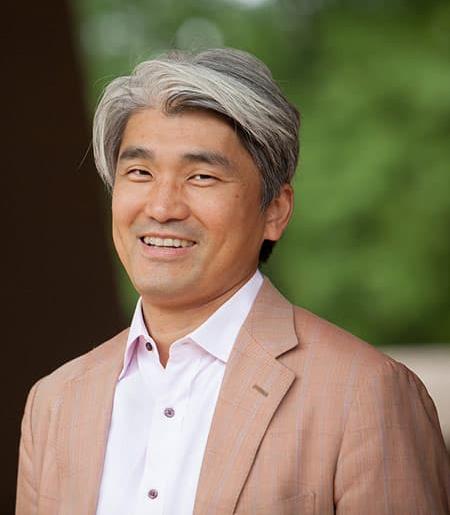
My recent work has been driven by a very simple question: how do we keep hope alive? I am interested in this question because of ongoing efforts to claim and even instrumentalize the category of hope in a wide spectrum of genres of knowledge from psychotherapy to conservative and progressive political thought. I have investigated the question in two radically different field sites, a peri-urban village in Suva, Fiji and a trading room of a major Japanese securities firm in Tokyo.
My first fieldwork project (1994-1996) focused on Suvavou people, descendants of the original landowners of Suva, Fiji's capital. My first book, The Method of Hope: Anthropology, Philosophy, and Fijian Knowledge (Stanford University Press, 2004), is a study of Suvavou people's long-standing hope to regain their ancestral land. In that book, drawing on extensive archival and field research, I examine how Suvavou people have kept hope alive over the last hundred years. My analysis draws attention to the capacity of Suvavou people to create hopeful moments across different facets of their life ranging from petitions to the government to gift-giving rituals, Christian church services and business activities. The book is also a critical assessment of well-known philosophical texts on hope such as the German Marxist thinker Ernst Bloch's book, The Principle of Hope, and represents my effort to carve out a space for a new kind of anthropological engagement with philosophy.
My second fieldwork project (1998-2012) focused on a team of Japanese derivatives traders at a major Japanese securities firm. The focus of this project was on these traders' career changes in the midst of Japan's economic slump. In my second book entitled Arbitraging Japan: Dreams of Capitalism at the End of Finance, I examine these traders' hopeful (and sometimes utopian) visions animating their daily trading and life decisions. In particular, I investigate how these traders have sought to extend economic assumptions such as the efficient market hypothesis, trading strategies such as arbitrage and tools of trade such as the Excel spread sheet program to facets of life beyond the market narrowly defined. The aim of this investigation is to explore the extent to which theories and techniques of finance have served these Japanese traders as an intellectual resource for developing critiques of capitalism and expanded visions of humanity. Underlying this project is a view of traders and other financial market experts as thinking subjects engaged in dialogue with various intellectual traditions.In both of these projects, my ultimate goal has been to construct an ethnographically informed theory of hope that is also hopeful.
In more concrete terms, I wish to join ongoing divergent efforts to reinvigorate anthropological knowledge and social theory by contributing to an understanding of the place of hope in knowledge formation, academic and otherwise. As part of this exploration, I have developed an international collaborative research project with the University of Tokyo鈥檚 Institute of Social Science (http://project.iss.u-tokyo.ac.jp/hope/).
Publications
Books:
Forthcoming. The Economy of Hope. Co-edited with Richard Swedberg. Philadelphia: University of Pennsylvania Press).
2013 Arbitraging Japan: Dreams of Capitalism at the End of Finance. Berkeley: University of California Press.
2009 Kibo toiu hoho (my own translation of The Method of Hope: Anthropology, Philosophy, and Fijian Knowledge, with a new preface). Tokyo: Ibun-sha.
2004 The Method of Hope: Anthropology, Philosophy, and Fijian Knowledge. Stanford: Stanford University Press.
Journal Articles and Book Chapters:
2015 鈥淗ope in the Crack of the Social: Reading the Book of Job in Post-Fukushima Japan.鈥� In Hope. Ingolf U. Dalferth and Marlene A. Block, eds. T眉bingen, Germany: Mohr Siebeck.
2015 鈥淗ope in the Gift鈥擧ope in Sleep.鈥� In Trust and Hope: Negotiating the Future: Dialogues between Anthropologists and Philosophers. Sune Liisberg, Esther Oluffa Pedersen, and Anne Line Dalsg氓rd, eds., eds. Pp. 209-218. Oxford: Berghahn.
2014 鈥淚nsistence and Response: On Ethnographic Replication.鈥� Common Knowledge 20(3): 518-526.
2014 鈥淗ope.鈥� In To See Once More the Stars: Living in a Post-Fukushima World. Daisuke Naito, Ryan Sayre, Heather Swanson and Satsuki Takahashi, eds. Pp. 248-249. Santa Cruz: New Pacific Press.
2014 鈥淪aving TEPCO: Debt, Credit and the 鈥楨nd鈥� of Finance in Post-Fukushima Japan.鈥� In Corporations, and Citizenship. Greg Urban, ed. Pp. 127-140. Philadelphia: University of Pennsylvania Press.
2013 鈥淭he Gift in Finance.鈥� NatureCulture 2 (http://natureculture.sakura.ne.jp): 38-49.
2013 鈥淛apan at the 鈥楨nd鈥� of Finance鈥� (as part of 鈥淥pinions: The Anthropology of Finance鈥�). Journal of Business Anthropology 2(1): 60-62.
2012 鈥淭he End of Finance?鈥� (as part of 鈥淭heorizing the Contemporary: Finance鈥�). Cultural Anthropology Virtual Issue.
2010 鈥淕ifts and Exchange.鈥� In The Oxford Handbook of Material Culture Studies. Dan Hicks and Mary Beaudry, eds. Pp. 246-264. Oxford: Oxford University Press.
2010 鈥淭he Temporality of No Hope.鈥� In Ethnographies of Neoliberalism. Carol Greenhouse, ed. Pp. 238-250. Philadelphia: University of Pennsylvania Press.
2008 鈥淏arack Obama鈥檚 Campaign of Hope: Unifying the General and the Personal鈥� (In Focus Commentary), Anthropology News, November 2008, pp. 5, 8.
2007 鈥淎rbitraging Faith and Reason鈥� (Commentary on Jane Guyer, 鈥淧rophecy and the Near Future: Thoughts on Macroeconomic, Evangelical and Punctuated Time鈥�). American Ethnologist 34(3): 430-432.
2007 鈥淏etween Arbitrage and Speculation: An Economy of Belief and Doubt.鈥� Economy and Society 36(3): 397-416.
2006 鈥淒ocumenting the Present.鈥� In Documents: Artifacts of Modern Knowledge. Annelise Riles, ed. Pp. 206-225. Ann Arbor: University of Michigan Press.
2006 鈥淓conomy of Dreams: Hope in Global Capitalism and Its Critiques.鈥� Cultural Anthropology 21(2): 147-172.
2005 鈥淔ailure as an Endpoint鈥� (co-authored with Annelise Riles). In Global Assemblages: Technology, Politics, and Ethics as Anthropological Problems. Aihwa Ong and Stephen J. Collier, eds. Pp. 320-331. Malden, MA: Blackwell.
2005 鈥淔rom Sugar Cane to 鈥楽words鈥�: Hope and the Extensibility of the Gift in Fiji.鈥� Journal of the Royal Anthropological Institute (N.S.) 11(2): 277-295.
2005 鈥淜eeping Hope Alive in Anthropological Research鈥� (essay contribution to a discussion forum entitled 鈥淭he Research Object and the Subjectivity of the Researcher鈥�). Forum for Anthropology and Culture (Peter the Great Museum of Anthropology and Ethnography [Kunstkamera], Russian Academy of 麻豆视频) 2: 51-55 [The Russian version published in Antropologicheskii forum 2 (June 2005)]
2005 鈥淭he Materiality of Finance Theory.鈥� In Materiality. Daniel Miller, ed. Pp. 165-181. Durham: Duke University Press.
2004 鈥淒elegating Closure.鈥� In Law and Empire in the Pacific: Fiji and Hawai鈥榠. Sally Engle Merry and Donald Brenneis, eds. Pp. 239-259. Santa Fe: School of American Research Press.
2003 鈥淭he Temporalities of the Market.鈥� American Anthropologist 105(2): 255-265.
2000 "The Limits of Politics." People and Culture in Oceania 16: 109-122.
2000 "Faith and Its Fulfillment: Agency, Exchange and the Aesthetics of Completion." American Ethnologist 27(1): 31-51.