Overview
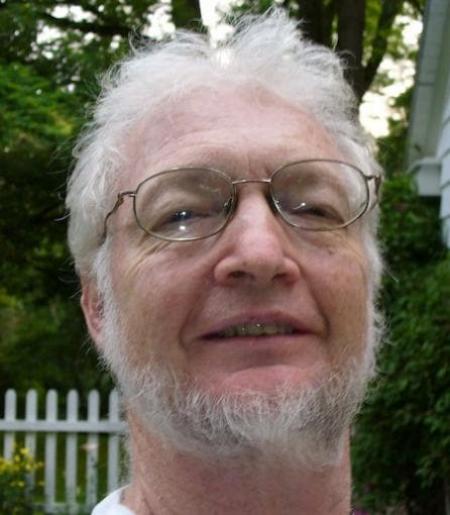
Professor Kline's current research areas are the history of cybernetics and digitalization. He is the author of numerous articles on the history of engineering, industrial research, technology in rural life, and information science and technology, as well as engineering ethics. The author of three books - Steinmetz: Engineer and Socialist (1992), Consumers in the Country: Technology and Social change in Rural America (2000), and The Cybernetics Moment, Or Why we Call Our Age the Information Age (2015), all published by Johns Hopkins University Press - Professor Kline is now writing a book on the history of digitalization in the Cold War.
He is past president of the Society for the History of Technology and the IEEE Society for the Social Implications of Technology, former chief editor of IEEE's Technology & Society Magazine, former advisory editor for Technology and Culture, Isis, and Engineering Studies, and is currently an advisory editor for Social Studies of Science. Before his retirement in 2020, he founded and directed the in the College of Engineering and taught undergraduate and graduate classes on the history of science and technology and the history of information technology.
Publications
鈥淗ow Disunity Matters to the History of Cybernetics in the Human 麻豆视频,鈥� History of the Human 麻豆视频, 33 (2020): 12-35.
鈥淭he Modem that Still Connects Us,鈥� in Historical Studies in Computing, Information and Society: Insights from the Flatiron Lectures, edited by William Aspray (Springer Nature Switzerland, 2019), pp. 29-50.
鈥淚nventing an Analog Past and a Digital Future in Computing,鈥� in The Early Digital, edited by Thomas Haigh (Springer Nature Switzerland, 2019), pp. 19-39.
Kline, Ronald. 鈥淢athematical Models of Technological and Social Complexity,鈥� in Technology and Mathematics: Philosophical and Historical Investigations, edited by Sven Ove Hansson (Berlin: Springer International, 2018), pp. 285-304.
Lieberman, Jennifer L. and Ronald R. Kline, 鈥淒ream of an Unfettered Electrical Future: Nikola Tesla, the Electrical Utopian Novel, and an Alternative American Sociotechnical Imaginary,鈥� Configurations, 25, no. 1 (Winter 2017): 1-27.
The Cybernetics Moment, Or Why We Call Our Age the Information Age. Baltimore, MD: Johns Hopkins University Press, 2015.
"Cybernetics, Automata Studies, and the Dartmouth Conference on Artificial Intelligence," IEEE Annals of the History of Computing, 33, no. 4 (Oct-Dec 2011), pp. 5-16.
"Engineering Case Studies: Bridging Micro and Macro Ethics," IEEE Technology and Society Magazine, 29, no. 4 (Winter 2010): 16-19.
"Where are the Cyborgs in Cybernetics?" Social Studies of Science, 33 (June 2009): 331-362.