Overview
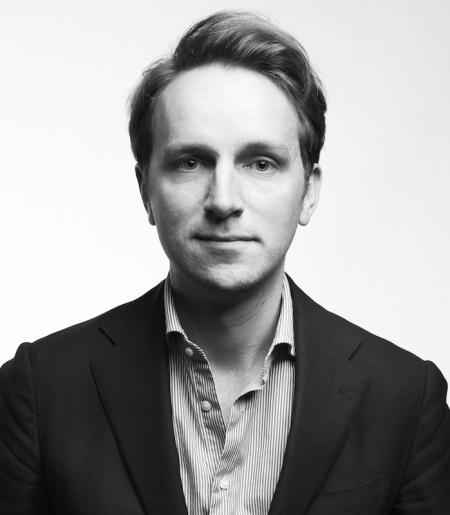
Nicholas Mulder works on European and international history from the nineteenth century to the present. His research focuses on political, economic, military and intellectual history, with particular attention to the era of the world wars between 1914 and 1945.
His first book (2022) is a history of the interwar origins of economic sanctions.The Economic Weapon has been awarded the 2024 Paul Birdsall Prize in European military and strategic history by the American Historical Association (AHA), the 2023 Stuart L. Bernath Prize for best first book by the Society for Historians of American Foreign Relations (SHAFR), and was named a Best Book of 2022 by The Economist and Foreign Affairs. It has been translated into Japanese, traditional and simplified Chinese, Vietnamese and Italian.
Mulder's second book is forthcoming in May 2026 with Little, Brown in the US and Allen Lane in the UK. It is an international history of expropriation and state formation. It examines the seizure of property within the great transformations of the 19th and 20th centuries鈥揻rom the absolutist and revolutionary destruction of feudalism to the emancipation of slaves and serfs, and from the sequestration of foreign assets in the world wars to the nationalization and privatization of industry and infrastructure in the postwar era. The book shows how large-scale coercive asset transfers have been a major force in recent political and economic history, as societies have been shaped by the proprietarian and confiscatory sides of state power.
His other interests include the history of Eurasia in the long run; the relationship between economic globalization, democracy, and authoritarianism; the experience of small states in the global condition; the history of political and economic thought; and philosophy of history.
Mulder supervises and assists doctoral dissertation projects with a political-economic, European and international focus: on interwar Czechoslovak land reform and nation-building; post-WWII Polish mining and economic reconstruction; fin-de-si猫cle Ottoman-European relations and crises of humanitarian intervention; Italian fascist imperialism; the history of entrepreneurship in postwar America; and the history of island resources in the South China Sea from the Qing era to the PRC.
Mulder has written about European history, politics, economics, and international affairs for a variety of newspapers and magazines, including The New York Times, The Economist, Financial Times, The Wall Street Journal, The Guardian, Foreign Affairs, Foreign Policy, n+1, New Left Review, The Nation, The New Statesman, Merkur, Dissent, H-Diplo, Het Financieel Dagblad, Le Grand Continent, Internazionale and other publications. Links to his articles, essays, and book reviews are available through his .
In addition to his appointment in the Department of History, Mulder is a Faculty Associate at Cornell's Einaudi Center for International Studies and a member of the Steering Committee of the Reppy Institute for Peace and Conflict Studies.
Research Focus
- Political and economic history of modern Europe
- International history
- Historical political economy
- History of geoeconomics
- Economic sanctions
- Confiscation, expropriation, and property regimes
- History of war (especially 1870 to 1945)
- History of international law
Publications
Books
The Economic Weapon: The Rise of Sanctions as a Tool of Modern War (New Haven & London: Yale University Press, 2022).
The Age of Confiscation: Making and Taking Property in the Creation of the Modern State (New York: Little, Brown/London: Allen Lane, 2026).
Articles and Book Chapters
鈥榁ier Thesen 眉ber die Geschichte der Enteignung,鈥� in Niklas Angebauer, Jacob Blumenfeld, and Tilo Wesche, eds., Umk盲mpftes Eigentum: Eine gesellschaftstheoretische Debatte (Frankfurt: Suhrkamp, 2025).
鈥楨l intergubernamentalismo y la Uni贸n Europea,鈥� in Carlos Corrochano, ed., Claves de pol铆tica global (Madrid: Arpa, 2024).
"The Neoliberal Transition in Intellectual and Economic History," Journal of the History of Ideas Vol. 84 No. 3 (July 2023).
"Asian Commercial Power and Economic Sanctions Against Russia," East Asia Forum Quarterly Vol. 15 No. 2 (June 2023).
"The Trump Administration and Economic Sanctions," in Robert Jervis, Diane Labrosse, Stacie Goddard, and Joshua Rovner, eds., Chaos Reconsidered: The Liberal Order and the Future of International Politics (New York: Columbia University Press, 2023).
"The Sanctions Weapon," Finance and Development: A Quarterly Publication of the International Monetary Fund Vol. 59 Issue 2 (June 2022).
"Why Did Starvation Not Become the Paradigmatic War Crime in International Law?" in Kevin Jon Heller and Ingo Venzke, eds., Contingency in International Law: On the Possibility of Different Legal Histories (Oxford: Oxford University Press, 2021): 370-390. (Co-authored with Boyd van Dijk)
"The Trading with the Enemy Acts in the Age of Expropriation, 1914-1949," Journal of Global History Vol. 15, No. 1 (March 2020): 81-99.
"鈥楢 Retrograde Tendency鈥�: The Expropriation of German Property in the Versailles Treaty," Journal of the History of International Law/Revue d'histoire du droit international Vol. 22, No. 1 (2020): 507-530.
"The Rise and Fall of Euro-American Inter-State War," Humanity, Vol. 10, No. 1 (Spring 2019): 133-153.
"," in Ute Daniel, Peter Gatrell, Oliver Janz, Heather Jones, Jennifer Keene, Alan Kramer, and Bill Nasson, eds., 1914-1918-online. International Encyclopedia of the First World War, Freie Universit盲t Berlin (February 2018).
In the news
- LaFeber-Silbey Lecture considers 鈥淎 World Without Law?鈥�
- After three years of war in Ukraine, Cornell experts assess endgame
- The west would harm itself with rash seizures of frozen Russian assets
- Sanctions Against Russia Ignore the Economic Challenges Facing Ukraine
- Don鈥檛 Expect Sanctions To Win the Ukraine War
- Experts: Ukraine war puts world in 鈥榰ncharted territory鈥�
- Environmental degradation focus of LaFeber-Silbey lecture March 10
- Economic sanctions evolved into tool of modern war
- COP 26 ushers 鈥榥ew domain of geopolitics鈥� as Russia demands sanction relief
- 鈥楳ild鈥� Russian sanctions signal need for de-escalation
- World Economic Forum features history professor鈥檚 analysis
- My Country Is Under Attack