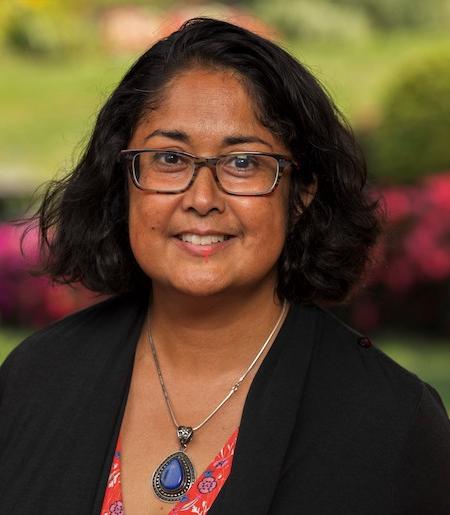
Overview
My teaching and research focus on the history of British colonialism on the Indian subcontinent. I am the author of two books, and more than a dozen journal articles and book chapters; in one way or another, they all focus on the relationship between colonial agents, officials, and elites and those who were colonized. Since I arrived at Cornell in 2005, I have taught courses on modern South Asia, the British empire, gender, and colonialism.
In 2023-24, I will be on sabbatic leave working on my next book, Moving Monuments, which follows the movement of commemorative statues made in studies in London and the British isles to various sites across the empire, most notably the Indian subcontinent. I have already published a few pieces related to this project: showing the relationship between , explaining why there is no Rhodes statue in London and how in the city of Calcutta (now Kolkata).
My first book, , is about conjugal relationships between colonial officials and residents and local women in India; the book focused on gender, culture, law, archives, and colonial governance in eighteenth- and nineteenth-century India. In connection with this research, I teach courses on South Asia, gender, sexuality and the state.
My recent book, focuses on an underground radical political movement in early and mid-twentieth century India and the ways in which political violence against the British colonial state became an important, but historically underemphasized, form of protest. While Gandhi's nonviolent protest movements are often seen to be the hallmark of anticolonial protest, the book follows how the colonial state invested in security and emergency legislation to contain what they felt was an active terrorist threat. In the process of writing this book, I have become fascinated with the ways that political violence has become a central part of popular historical narratives.
At Cornell, I have been involved with the Humanities Scholars Program, the Feminist, Gender, and Sexuality Studies program, the South Asia Program, the Mario Einaudi Center for International Studies, the Society for the Humanities, the Institute for Social 麻豆视频, the CIVIC initiative that emerged out of the Radical Collaborations projects. Further afield, I have served on program and prize committees for the American Historical Association, American Institute of Indian Studies, Association of Asian Studies, Berkshire Conference of Women Historians, and North American Conference on British Studies. I am currently an associate editor for South Asia for the Journal of Asian Studies and the co-chair of the Association of Asian Studies conference in 2025.
Research Focus
- Modern South Asia, gender, colonialism
Publications
Books
Co-editor with Dane Kennedy,
Recent publications
鈥淐an an archive be revolutionary?: how to document radical aspirations in a time of dissensus,
鈥淪tabilizing history: statues, monuments, and memorials in Curzon鈥檚 India,鈥� Historical Journal 66.2 (2023): 348-69.
Articles on political violence in colonial India
鈥淭he 鈥榯errorist鈥� and his jailor: the conundrum of 鈥榝riendship鈥� and intimacy,鈥� article for special issue of Itinerario, 鈥淭he Private Lives of Empire: Race, Emotion and the Intimate in Colonial Rule,鈥� edited by William Jackson, Itinerario 42.1 (2018): 102-19.
鈥淕andhi and the Terrorists,鈥� article for special issue of South Asia 32.3 on 鈥淲riting Revolution; practice, history, politics in modern South Asia鈥� edited by Daniel Eelam, Kama Maclean, and Chris Moffat. (September 2016): 560-76.
鈥淎n Archive of 鈥楶olitical Trouble in India鈥�: history-writing, anticolonial violence, and colonial counterinsurgency, 1905-37,鈥� in The Oxford Handbook of the History of Terrorism, edited by Carola Dietze and Claudia Verhoeven, published online, 2014.
鈥淗istory Makes Women Well-behaved鈥�: Revolutionary Women, Nationalist Heroes," Gender and History 25.2 (August 2013): 355-75.
鈥淭errorism in Bengal: imperial strategies of political violence and its containment in the interwar years,鈥� in Decentring Empire (Delhi: Orient Longman, 2006).
Articles on historiography
鈥淲hither India?: 1919 and the aftermath of the first world war,鈥� for forum on 1919 in Journal of Asian Studies 78.2 (May 2019): 389-97.
鈥淣ew Directions in Transnational History,鈥� in New Directions in Social and Cultural History, edited by Sasha Handley, Rohan McWilliam, and Lucy Noakes (London: Bloomsbury, 2018).
鈥淭he archives of Geraldine Forbes and Barbara Ramusack: restoring women鈥檚 voices,鈥� for a fetzschrift edited by Padma Anagol and Swapna Banerjee (under contract with Oxford University Press).
Roundtable on Historiographic 鈥淭urns鈥� in Critical Perspective: 鈥淎nother Set of Imperial Turns?鈥� American Historical Review 117.3 (June 2012): 772-93.
鈥淥ptimism and Political History: a perspective from India,鈥� Perspectives on History 49.5 (May 2011): 25-27.
鈥淚ntroduction,鈥� in Decentring Empire: Britain, India and the Transcolonial World, written with Dane Kennedy (Delhi: Orient Longman, 2006).
Articles on gender, sexuality, and colonialism
鈥淏ody Politics, Sexualities, and the 鈥榤odern family鈥� in Global History,鈥� in World Histories from Below: Dissent and Disruption, 1750-present, edited by Antoinette Burton and Tony Ballantyne (Bloomsbury, 2016).
鈥淟egal and Liberal Subjects: women鈥檚 crimes in early colonial India,鈥� Journal of Women鈥檚 History 22 (Summer 2010): 153-56.
鈥淲ho counts as 鈥榥ative?鈥欌��: gender, race, and subjectivity in colonial India,鈥� Journal of Colonialism and Colonial History 6.3 (2005).
鈥淣ational Narratives and the Politics of Miscegenation: Britain and India鈥� in Archive Stories, edited by Antoinette Burton (Durham: Duke University Press, 2005).
鈥淒ecoding the Nameless: Gender, Subjectivity, and Historical Methodologies in Reading the Archives of Colonial India,鈥� in A New Imperial History: Culture, Identity, Modernity, 1660-1840, edited by Kathleen Wilson (Cambridge: Cambridge University Press, 2004).
鈥淗ousehold Crimes and Domestic Order: Keeping the Peace in Colonial Calcutta, c.1770- c.1840,鈥� Modern Asian Studies 38, 3 (July 2004): 598-624.
鈥淕ender and Colonialism: expansion or marginalization?鈥� The Historical Journal 47, 3 (September 2004): 737-55.
鈥淢aking and Un-making Loyal Subjects: Pensioning Widows and Educating Orphans in Early Colonial India,鈥� Journal of Imperial and Commonwealth History 31 (January 2003): 1-28.
Articles on public history
鈥淓xhibiting Asia: Museums, Consumption, and Commerce,鈥� in Contested Histories in Public Space: Memory, Race, and Nation, edited by Daniel J. Walkowitz and Lisa Knauer (Durham: Duke University Press, 2009).
In the news
- Medical anthropologist to deliver annual Society for Humanities lecture
- Cornell history scholars in residence at Institute for Advanced Study
- Outstanding A&S teachers, advisors honored with 2024 awards
- Ghosh to lead Cornell鈥檚 Society for the Humanities
- History alum receives Pulitzer Prize for story of dementia
- From poetry to philosophy to politics, Humanities Scholars share research
- History department begins three-year active learning initiative
- Humanities students present diverse research projects
- What to read in 2022? A&S faculty weigh in
- 鈥楽till a long way to go:鈥� Looking back on the start of women鈥檚 studies at Cornell
- Students explore 9/11 from multiple perspectives in new class
- FGSS/LGBT programs plan yearlong anniversary celebration
- Humanities students share wide variety of research in spring event
- From vaults to virtual classes, library archives enrich teaching
- Faculty research group addressing monuments, heritage
- Einaudi-funded Ph.D. students think globally, act remotely
- First cohort of Humanities Scholars chosen by Arts & 麻豆视频
- Ghosh named director of new Humanities Scholar Program
- Self-assembling system uses magnets to mimic specific binding in DNA
- $6M alumni gift launches Humanities Scholars Program
- Grants create engagement opportunities for students
- Provost鈥檚 seminar celebrates innovation in teaching
- Einaudi Center funds Cornell dissertations with global impact
- Caesar鈥檚 death and life in Antiquitas podcast
- With Cornell grants, faculty launch social sciences research
- Podcast explores love in colonial India
- FGSS convenes 鈥楾he Future is Feminist鈥� book club
- Seven projects awarded 2018 digitization grants
- Historian examines India's 'gentlemen' terrorists
- New provost's task force continues push for a diverse Cornell faculty
- New University Courses tackle love, food justice